
A restrictive tongue or lip tie can sometimes make everyday oral movements more difficult for a child. At Smile First Dental, we provide careful pediatric frenectomy evaluations in Durham, NC to determine whether restricted tissue is affecting your child’s oral function.
.jpeg)
A pediatric frenectomy is a procedure used to release a restrictive frenum, which is a small band of tissue inside the mouth. The lingual frenum connects the tongue to the floor of the mouth, while the labial frenum connects the lip to the gums. When one of these tissues significantly limits movement, it may be described as a tongue tie or lip tie.
Not every child with a noticeable frenum needs treatment. A frenectomy is generally considered when the restriction contributes to a meaningful functional concern. Our team evaluates tongue and lip movement, oral development, dental hygiene, feeding concerns, and other factors before recommending treatment. This function first approach is consistent with current pediatric dental guidance.
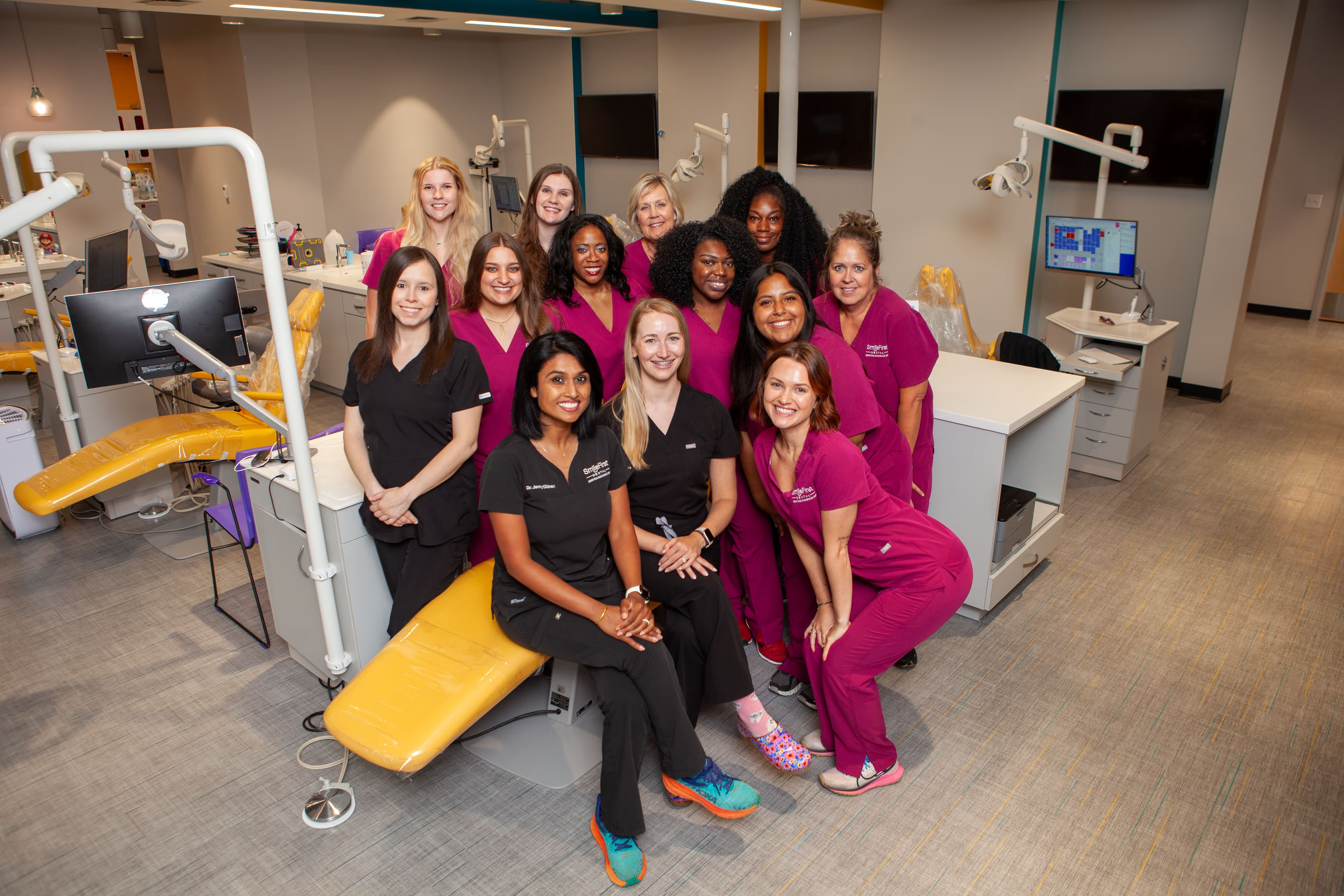
Dr. Jenny Citineni is a board-certified pediatric dentist with a passion for creating positive dental experiences for children. Originally from Hyderabad, India, she earned her dental degree from UNC School of Dentistry and later served as Dental Director of a Children’s Health Department Dental Clinic in North Carolina.
Recognized for her dedication and achievements, Dr. Jenny is committed to making every child feel comfortable, valued, and excited about their dental health journey.

Pediatric Dentist
Dr. Emilee Hrtyanski was born and raised in West Virginia, and earned her Doctorate of Dental Surgery degree from West Virginia University School of Dentistry. She completed her pediatric dentistry residency at Texas A&M, Texas Scottish Rite Hospital for Children, and Children's Medical Center in Dallas, Texas.
She is board-certified with the American Board of Pediatric Dentistry. She is also a member of the American Dental Association, American Academy of Pediatric Dentistry, and Southeastern Society of Pediatric Dentistry.

Pediatric Dentist
Dr. Haley Willis is a board-certified pediatric dentist originally from Chase City, Virginia. She earned her dental degree from The Ohio State University College of Dentistry and completed her pediatric dental residency at Children’s Hospital of Michigan.
Dr. Haley is passionate about creating positive dental experiences for children and providing personalized, compassionate care for every patient. Outside the office, she enjoys spending time with her family, exploring local parks, and cheering on her favorite sports teams.

Pediatric Dentist
Meet Kids Favourite Pediatric Dentist
Dr. Jenny Citineni is a board certified pediatric dentist and originally from Hyderabad, India. She has spent most of her life in Durham attending Githens Middle, Riverside High, and NC School of Science and Math. She found her passion for dentistry after she graduated UNC-Chapel Hill. As an AmeriCorps Public Ally, she met a dentist who introduced her to the different aspects of the field, and she quickly found a passion for the art, results, and positive patients - especially the kids! Within 6 months of meeting the dentist, she was accepted into UNC School of Dentistry.
After earning her dental degree, she became the Dental Director of a Children's Health Department Dental Clinic in Lexington, NC. Dr. Jenny is a recognized, sought-after pediatric dentist. Her accomplishments and awards speak to her drive, ambition, and passion for delivering quality care:
She treats every child like a star, and makes each patient feel comfortable and excited about their dental health journey. She has two little stars of her own, Ava and Ella with her husband, Tommy Thekkekandam. Tommy and Dr. Jenny have a passion project of making delicious tasty treats that are sugar free for everyone to enjoy! They love to bake, eat, hike, swim and explore the world!


.png)


Meet Kids Favourite Pediatric Dentist
Dr. Emilee Hrtyanski was born and raised in West Virginia, and earned her Doctorate of Dental Surgery degree from West Virginia University School of Dentistry. She completed her pediatric dentistry residency at Texas A&M, Texas Scottish Rite Hospital for Children, and Children's Medical Center in Dallas, Texas. She is board-certified with the American Board of Pediatric Dentistry. She is also a member of the American Dental Association, American Academy of Pediatric Dentistry, and Southeastern Society of Pediatric Dentistry.
In Dr. Emilee's free time, she loves traveling with her fiancé, spoiling her puppy, practicing yoga, and cheering on her beloved Mountaineers.
Meet Kids Favourite Pediatric Dentist
Dr. Haley Willis is a board-certified pediatric dentist from Chase City, VA, a small town in southern Virginia. She received her bachelor’s degree from Virginia Tech and earned her Doctor of Dental Surgery at The Ohio State University College of Dentistry. She completed her pediatric dental residency in Detroit, Michigan at the Children’s Hospital of Michigan. She is a member of the American Dental Association, American Academy of Pediatric Dentistry, North Carolina Dental Society, and Southeastern Society of Pediatric Dentistry. Dr. Haley and her husband, Anthony, have two daughters, Sophia and Georgia, and a baby boy on the way.
They are so excited to call North Carolina home and explore all this wonderful state has to offer. In their free time, they enjoy spending time with family and friends, attending gymnastics and dance recitals, exploring local parks and trails, and watching their favorite sports teams!
Dr. Haley is honored to treat the wonderful families of Durham and the surrounding areas. She truly enjoys her daily interactions with her patients and sees each day at the office as a new adventure.
She treasures each child as an individual with their own unique needs and cannot wait to meet y’all soon!

Choosing a provider for your child’s frenectomy starts with finding a team that understands pediatric development as well as the function of the tongue, lips, teeth, and surrounding tissues. At Smile First Dental, every recommendation begins with a careful evaluation.
Our goal is not simply to identify a tongue or lip tie. We want to understand whether the restriction is actually affecting your child and whether a tongue or lip tie release could play a useful role in improving oral function.

Releasing restrictive tissue can increase the available movement of the tongue or lip, giving your child greater freedom to perform oral movements that were previously difficult.
A restrictive lip frenum can sometimes make certain areas more difficult or uncomfortable to brush. Improved access may make daily cleaning around the gums and front teeth easier.
When limited movement contributes to a functional concern, a frenectomy may become one part of a broader treatment plan involving dental care, feeding support, or therapy when needed.
When a restrictive frenum pulls on the gum tissue, a frenectomy may reduce unwanted tension and help protect the gums from continued irritation or recession.
1
Bottlenecks are points in a process where the flow is restricted, causing delays and inefficiencies. Identifying these bottlenecks is crucial for process improvement. By analyzing data and gathering feedback, teams can pinpoint where issues arise and develop strategies to alleviate them.
2
Once bottlenecks are identified, it's time to implement changes. This involves planning, testing, and executing new strategies to enhance processes. Engaging team members in this phase is essential, as their insights can lead to more effective solutions.
3
Mapping processes visually helps teams understand workflows and identify areas for improvement. A process map outlines each step in a process, making it easier to spot inefficiencies and redundancies. This clarity fosters better communication and collaboration among team members.
4
Regularly reviewing processes is vital for ongoing improvement. This ensures that processes remain efficient and effective over time. By establishing a culture of continuous improvement, organizations can adapt to changes and maintain high performance
My toddler had a great first visit! Everyone was very friendly and knowledgeable and made my daughters first ever dental visit a pleasant one! This will definitely be our dental home moving forward!
Herison

This is a wonderful group of people. Some of the same employees took care of my teeth as I was growing up and it’s great to have many of the same ones help clean and keep my daughters teeth in great shape! I love Smile First and trust them with my daughter’s smile!!
Sara h

A visible tongue or lip tie alone does not mean your child needs treatment. A pediatric dentist should evaluate whether the tissue is actually restricting movement or contributing to a meaningful functional problem. Current pediatric dental guidance supports considering function, symptoms, and other possible causes before recommending a release.
A tongue tie involves the lingual frenum underneath the tongue and may limit tongue movement. A lip tie involves a labial frenum connecting the lip and gums. The presence of either type of frenum is normal. Treatment is considered when the tissue is unusually restrictive and associated with functional concerns.
No. Many children have an anatomical tongue tie without needing surgical treatment. Professional organizations recommend considering frenectomy when a significant functional restriction is present and other appropriate approaches have been evaluated. Smile First follows a conservative, function based approach when determining whether treatment is appropriate.
A restrictive tongue can sometimes be one factor considered when a child has feeding or oral movement concerns, but these issues can have many different causes. A frenectomy should not be presented as a guaranteed solution for speech or feeding problems. Depending on your child’s needs, coordinated care with a feeding specialist, speech professional, pediatrician, or another provider may be recommended.
Recovery depends on your child’s age, the type of release performed, and their individual needs. Our team provides specific aftercare instructions and explains what to expect during healing. Follow up may also be recommended so we can evaluate the treatment area and your child’s oral function.
.jpg)
Smile First Dental provides pediatric frenectomy and tongue tie evaluations in Durham, NC, at 3616 Durham Chapel Hill Blvd. Families can visit us for evaluation of restrictive tongue or lip tissue and receive clear guidance about whether a release is appropriate for their child.
Our Durham pediatric dental office also serves families from Chapel Hill, Morrisville, Hillsborough, Roxboro, Bahama, Oxford, Raleigh, and nearby communities. If you are concerned about your child’s tongue movement, lip mobility, oral hygiene, feeding, or another functional issue, our team can help you determine the appropriate next step
.svg)
.svg)


