
Dental visits can feel overwhelming for some children, especially when they are very young, nervous about treatment, sensitive to unfamiliar sounds or sensations, or need a longer dental procedure. Pediatric sedation dentistry can help make necessary dental care more manageable while supporting your child’s comfort during treatment.
.jpeg)
Pediatric sedation dentistry uses medication to reduce dental anxiety and help children remain calm and comfortable during dental treatment. The level of sedation needed can vary depending on your child’s age, medical history, anxiety level, ability to cooperate, and the type or length of treatment planned.
Sedation does not automatically mean your child will be asleep. With nitrous oxide, children usually remain awake and responsive. General anesthesia is different because the child is fully asleep while dental care is completed. Our team discusses the available options with parents before treatment so you understand what is being recommended and why.
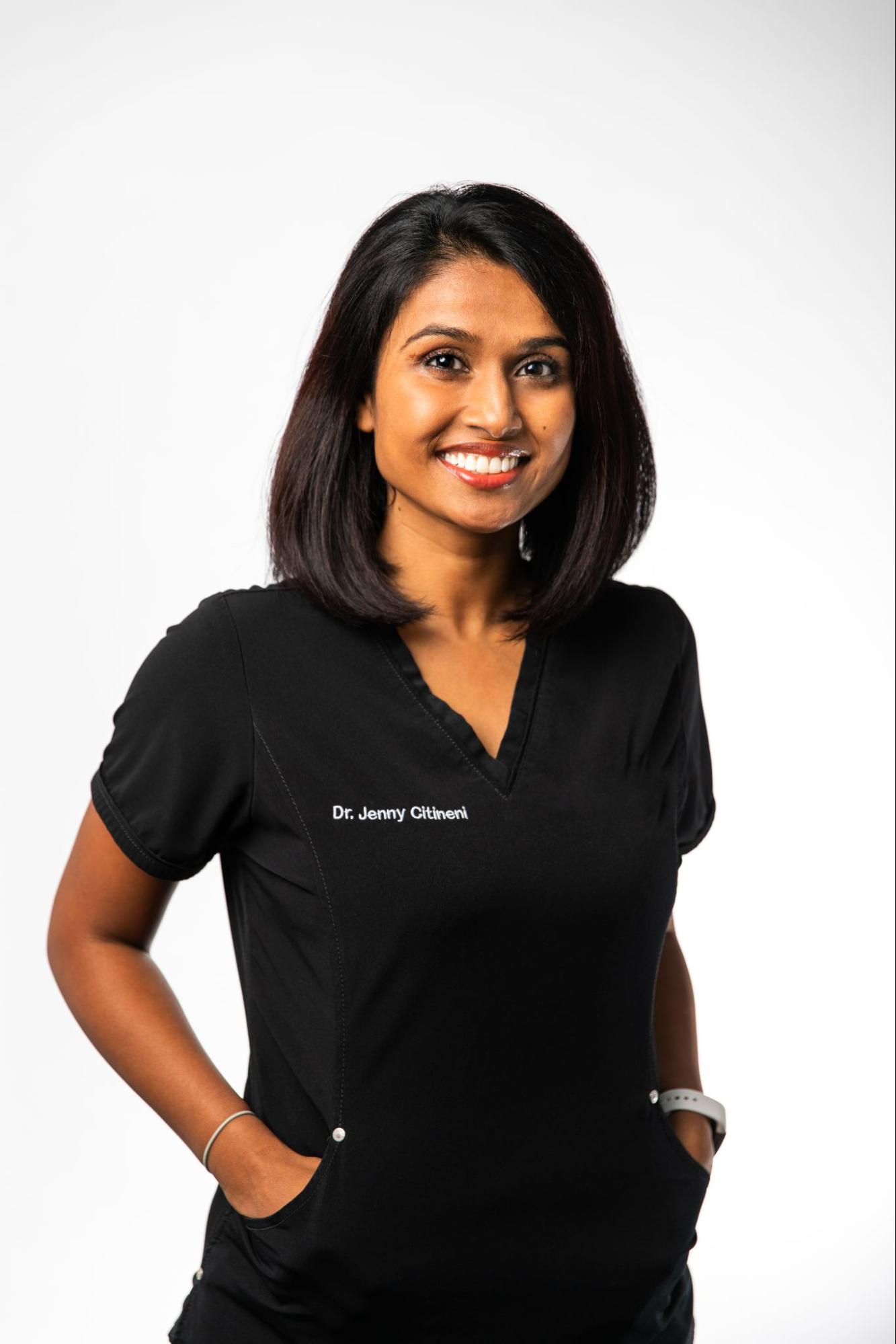
Dr. Jenny Citineni is a board-certified pediatric dentist with a passion for creating positive dental experiences for children. Originally from Hyderabad, India, she earned her dental degree from UNC School of Dentistry and later served as Dental Director of a Children’s Health Department Dental Clinic in North Carolina.
Recognized for her dedication and achievements, Dr. Jenny is committed to making every child feel comfortable, valued, and excited about their dental health journey.
Pediatric Dentist
Dr. Emilee Hrtyanski was born and raised in West Virginia, and earned her Doctorate of Dental Surgery degree from West Virginia University School of Dentistry. She completed her pediatric dentistry residency at Texas A&M, Texas Scottish Rite Hospital for Children, and Children's Medical Center in Dallas, Texas.
She is board-certified with the American Board of Pediatric Dentistry. She is also a member of the American Dental Association, American Academy of Pediatric Dentistry, and Southeastern Society of Pediatric Dentistry.

Pediatric Dentist
Dr. Haley Willis is a board-certified pediatric dentist originally from Chase City, Virginia. She earned her dental degree from The Ohio State University College of Dentistry and completed her pediatric dental residency at Children’s Hospital of Michigan.
Dr. Haley is passionate about creating positive dental experiences for children and providing personalized, compassionate care for every patient. Outside the office, she enjoys spending time with her family, exploring local parks, and cheering on her favorite sports teams.

Pediatric Dentist
Meet Kids Favourite Pediatric Dentist
Dr. Jenny Citineni is a board certified pediatric dentist and originally from Hyderabad, India. She has spent most of her life in Durham attending Githens Middle, Riverside High, and NC School of Science and Math. She found her passion for dentistry after she graduated UNC-Chapel Hill. As an AmeriCorps Public Ally, she met a dentist who introduced her to the different aspects of the field, and she quickly found a passion for the art, results, and positive patients - especially the kids! Within 6 months of meeting the dentist, she was accepted into UNC School of Dentistry.
After earning her dental degree, she became the Dental Director of a Children's Health Department Dental Clinic in Lexington, NC. Dr. Jenny is a recognized, sought-after pediatric dentist. Her accomplishments and awards speak to her drive, ambition, and passion for delivering quality care:
She treats every child like a star, and makes each patient feel comfortable and excited about their dental health journey. She has two little stars of her own, Ava and Ella with her husband, Tommy Thekkekandam. Tommy and Dr. Jenny have a passion project of making delicious tasty treats that are sugar free for everyone to enjoy! They love to bake, eat, hike, swim and explore the world!


.png)


Meet Kids Favourite Pediatric Dentist
Dr. Emilee Hrtyanski was born and raised in West Virginia, and earned her Doctorate of Dental Surgery degree from West Virginia University School of Dentistry. She completed her pediatric dentistry residency at Texas A&M, Texas Scottish Rite Hospital for Children, and Children's Medical Center in Dallas, Texas. She is board-certified with the American Board of Pediatric Dentistry. She is also a member of the American Dental Association, American Academy of Pediatric Dentistry, and Southeastern Society of Pediatric Dentistry.
In Dr. Emilee's free time, she loves traveling with her fiancé, spoiling her puppy, practicing yoga, and cheering on her beloved Mountaineers.
Meet Kids Favourite Pediatric Dentist
Dr. Haley Willis is a board-certified pediatric dentist from Chase City, VA, a small town in southern Virginia. She received her bachelor’s degree from Virginia Tech and earned her Doctor of Dental Surgery at The Ohio State University College of Dentistry. She completed her pediatric dental residency in Detroit, Michigan at the Children’s Hospital of Michigan. She is a member of the American Dental Association, American Academy of Pediatric Dentistry, North Carolina Dental Society, and Southeastern Society of Pediatric Dentistry. Dr. Haley and her husband, Anthony, have two daughters, Sophia and Georgia, and a baby boy on the way.
They are so excited to call North Carolina home and explore all this wonderful state has to offer. In their free time, they enjoy spending time with family and friends, attending gymnastics and dance recitals, exploring local parks and trails, and watching their favorite sports teams!
Dr. Haley is honored to treat the wonderful families of Durham and the surrounding areas. She truly enjoys her daily interactions with her patients and sees each day at the office as a new adventure.
She treasures each child as an individual with their own unique needs and cannot wait to meet y’all soon!

At Smile First Dental, sedation is never treated as the first solution for every nervous child. Our board-certified pediatric dentists are experienced in behavior guidance and helping children manage dental anxiety with a gentle, age-appropriate approach. When sedation is appropriate, we consider your child’s age, medical history, anxiety level, special healthcare needs, and planned dental treatment before recommending the right option.
Families can access different levels of pediatric dental sedation, including nitrous oxide for mild to moderate anxiety, in-office general anesthesia with board-certified anesthesia professionals, and hospital-based general anesthesia at Duke Children’s Hospital when a more advanced setting is appropriate. This allows us to create an individualized treatment plan focused on your child’s comfort, safety, and dental needs.

Sedation can reduce fear and stress surrounding dental treatment, helping children who would otherwise find necessary procedures difficult or overwhelming to complete successfully.
A calmer child can remain more comfortable and still during treatment, allowing the pediatric dentist to work carefully without repeatedly stopping because of anxiety or movement.
Sedation may allow children with extensive restorative needs to receive fillings, crowns, extractions, or other necessary dental treatment when conventional appointments are difficult.
Choosing appropriate behavior guidance and sedation can help prevent an already anxious child from becoming increasingly fearful because of a difficult or overwhelming dental experience.
1
Our pediatric dentist first evaluates your child’s teeth, treatment needs, age, medical history, previous dental experiences, anxiety level, and ability to cooperate during dental care.
2
We explain whether behavior guidance, nitrous oxide, general anesthesia, or another treatment approach is appropriate. Parents can discuss concerns, alternatives, preparation instructions, and expected recovery.
3
During the appointment, your child receives the planned sedation while the dental team completes the necessary care. The level of monitoring depends on the type of sedation being provided.
4
After treatment, we provide instructions based on the sedation method used. Some children recover quickly, while children receiving general anesthesia require additional observation and rest afterward.
My toddler had a great first visit! Everyone was very friendly and knowledgeable and made my daughters first ever dental visit a pleasant one! This will definitely be our dental home moving forward!
Herison

This is a wonderful group of people. Some of the same employees took care of my teeth as I was growing up and it’s great to have many of the same ones help clean and keep my daughters teeth in great shape! I love Smile First and trust them with my daughter’s smile!!
Sara h

Pediatric dental sedation can be used safely when the child is properly evaluated and the appropriate sedation method, monitoring, equipment, and trained professionals are used. Every form of sedation has potential risks, which is why our team reviews your child’s medical and dental history before recommending an option.
Pediatric dental sedation can be used safely when the child is properly evaluated and the appropriate sedation method, monitoring, equipment, and trained professionals are used. Every form of sedation has potential risks, which is why our team reviews your child’s medical and dental history before recommending an option.
Laughing gas provides mild sedation while allowing your child to remain conscious. General anesthesia produces a much deeper state in which your child is completely asleep. The appropriate option depends on factors such as anxiety, age, medical needs, cooperation, and treatment complexity.
Sedation may be considered when dental anxiety, young age, sensory concerns, special healthcare needs, a strong gag reflex, difficulty remaining still, or extensive treatment makes conventional dental care difficult. Your pediatric dentist should evaluate these factors before recommending sedation.
Nitrous oxide generally wears off quickly once administration stops and oxygen is given. Recovery from general anesthesia takes longer, and children may remain tired or less coordinated afterward. We provide detailed recovery instructions based on the sedation your child receives.
.jpg)
Smile First Dental provides pediatric sedation dentistry at 3616 Durham-Chapel Hill Blvd in Durham, NC. Our team helps parents understand sedation options for children experiencing dental anxiety, needing extensive restorative care, or having other needs that can make conventional dental treatment challenging.
Our Durham pediatric dental office also serves families from Chapel Hill, Morrisville, Hillsborough, Roxboro, Bahama, Oxford, Raleigh, and nearby communities. Whether your child needs mild nitrous oxide sedation or an evaluation for general anesthesia, we can help determine an approach based on their individual dental and comfort needs.
.svg)
.svg)


